
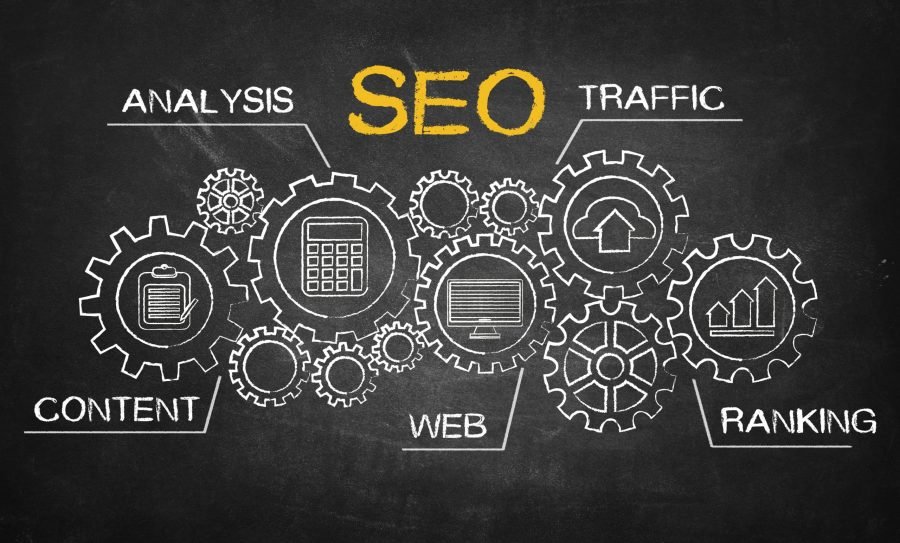
Search engine optimization, better known as SEO, is one of the most effective ways to attract visitors to your website without having to pay for every click. When your website appears prominently in Google and other search engines, you can generate a steady stream of visitors who are already looking for the products, services, or information you provide.
However, SEO is often misunderstood. It is not simply a matter of inserting keywords into an article and hoping that Google ranks it highly. Modern SEO involves content quality, website performance, search intent, technical structure, authority, and the overall experience you provide to visitors.
The good news is that you don’t need to be an SEO expert to start improving your website. There are several practical steps that almost any website owner can take.
Here are five effective ways to improve your SEO and increase your chances of attracting more organic search traffic.
One of the foundations of SEO is understanding what your potential visitors are actually searching for.
Keywords are the words and phrases people enter into search engines. If you understand those searches, you can create pages and articles designed to answer them.
A common mistake is targeting keywords that are far too broad. For example, a small business selling handmade furniture probably shouldn’t expect to rank immediately for a term such as “furniture.” There are enormous numbers of websites competing for that search.
A more realistic strategy might be targeting phrases such as:
“handmade dining tables in Ontario”
“custom farmhouse tables Ottawa”
“solid wood dining tables Canada”
“custom oak dining table near Ottawa”
These longer, more specific searches are often referred to as long-tail keywords. They may have fewer searches than broad keywords, but they can be much easier to rank for and can attract visitors with a more specific need.
Keyword research should also go beyond simply finding popular phrases. You should consider search intent.
Someone searching for “best laptops for programming” is probably looking for comparisons and recommendations. Someone searching for “Lenovo ThinkPad replacement keyboard” may be ready to purchase a specific component. Someone searching for “how to replace a laptop keyboard” is looking for instructions.
These are very different intentions.
Your content should match the reason someone is searching.
Once you identify an appropriate keyword, incorporate it naturally into your content. It can appear in your page title, main heading, introduction, subheadings, URL, and image alt text when appropriate.
Don’t overuse it, however. Repeating a keyword dozens of times can make your content awkward and may actually hurt the quality of the page.
The objective isn’t to convince a search engine that you’ve used a keyword enough times. The objective is to make it clear what your page is about while providing genuinely useful information.
High-quality content is at the heart of successful SEO.
Search engines want to provide users with useful results. If someone searches for a question, Google wants to show pages that actually answer that question rather than pages that merely contain the same words.
This means that creating content simply for the sake of publishing something every week isn’t necessarily a good SEO strategy.
Instead, think about the questions your customers and potential visitors have.
For example, if you operate a website design business, you could publish articles such as:
How much does a WordPress website cost?
How long does it take to build a business website?
WordPress vs. Wix: Which is better for a small business?
How do I improve my website’s loading speed?
What is SEO and how does it work?
How often should I update my website?
Each of these subjects represents a potential search opportunity.
The best articles don’t simply provide a few paragraphs of general information. They thoroughly address the subject and anticipate the questions a reader might have next.
For example, an article about improving website speed could explain how to test speed, why images affect loading times, how caching works, how hosting affects performance, and which problems commonly slow down websites.
This type of comprehensive content is more useful to readers and gives a page more opportunities to appear for related searches.
Publishing an article isn’t necessarily the end of the process.
Information changes. Products change. Statistics become outdated. Links stop working. Search trends evolve.
Periodically review your older articles and look for opportunities to improve them.
You might add new information, replace outdated statistics, update screenshots, fix broken links, expand sections, or answer questions that weren’t covered in the original article.
Updating an existing high-quality article can sometimes be more valuable than constantly producing new content.
SEO content should still sound natural.
Avoid awkward sentences created solely to insert keywords. A visitor should never feel as though an article was written for a search engine rather than a human being.
Write clearly, explain technical concepts when necessary, and organize longer articles with useful headings and subheadings.
The best SEO content usually succeeds because it is genuinely useful—not because it has been stuffed with keywords.
Even excellent content can have difficulty ranking if search engines cannot properly access, understand, or index your website.
Technical SEO involves the underlying structure and performance of your website.
One of the first things to check is whether your important pages can actually be indexed by search engines. Your website should have a logical structure that allows visitors and search-engine crawlers to move easily from one page to another.
Your website should also work properly on mobile devices. A large portion of web traffic comes from smartphones, so a website that is difficult to use on a small screen can create a poor user experience.
Website speed is another important consideration.
Large images, unnecessary scripts, poorly configured plugins, excessive tracking code, and slow hosting can all contribute to poor performance.
You can improve loading speed by optimizing images, using appropriate image formats, reducing unnecessary scripts, enabling caching, and choosing reliable hosting.
Every important page on your website should have a descriptive title.
A title such as:
Home
doesn’t tell search engines or visitors very much.
A more descriptive title might be:
WordPress Web Design Services in Ottawa | Company Name
Your meta description should also provide a concise explanation of what the page offers. Although meta descriptions aren’t simply a direct ranking switch, a useful description can help persuade someone to click your result.
Your website should make sense from both a visitor’s and a search engine’s perspective.
For example, a website selling gardening supplies might have:
Home → Products → Seeds → Vegetable Seeds → Tomato Seeds
This structure helps visitors understand where they are and helps search engines understand the relationship between different pages.
Internal links are particularly useful here. When you publish a new article, look for opportunities to link it to relevant pages elsewhere on your website.
If you write an article about WordPress website security, for example, you could link to your WordPress hosting service, security services, or related articles.
Backlinks are links from other websites pointing to your website.
They can be valuable because links from reputable and relevant websites can help demonstrate that your content is worth referencing.
However, SEO has changed considerably from the days when website owners could simply acquire hundreds or thousands of links and expect their rankings to improve.
Quality matters.
A link from a respected website related to your industry can be much more valuable than a large number of irrelevant or low-quality links.
For example, if you operate an electrical engineering company, a link from an engineering association, industry publication, university, or respected technical website could be particularly relevant.
One of the best ways to earn backlinks is to create content that other websites naturally want to reference.
This could include:
Original research
Industry statistics
Detailed tutorials
Comprehensive guides
Calculators and useful tools
Original diagrams
Case studies
Surveys
Technical documentation
Data-driven articles
Think about what would make another website owner say, “I should link to this.”
That is a much stronger strategy than simply trying to acquire links wherever possible.
Publishing excellent content doesn’t guarantee that people will discover it.
Promote useful articles through social media, industry communities, newsletters, professional organizations, and relevant online publications.
You can also contact websites that have published related material and let them know about a resource you’ve created—provided the outreach is genuinely relevant and isn’t simply mass-produced spam.
The objective is to build relationships and make useful information easier to discover.
SEO ultimately leads back to the people visiting your website.
Getting someone to click on your search result is only part of the process. Once they arrive, your website needs to provide a good experience.
A visitor who lands on a confusing, slow, outdated website may leave immediately.
Start by making your pages easy to read.
Use:
Clear headings
Short paragraphs
Descriptive subheadings
Bullet points
Relevant images
Easy-to-understand navigation
Clearly labeled links
Strong calls to action
Avoid enormous blocks of text whenever possible.
A visitor should be able to quickly scan a page and understand what it is about.
Think about what someone visiting your website is trying to accomplish.
If you operate a service business, visitors may immediately want to know:
What do you offer?
How much does it cost?
Where do you operate?
Why should I choose you?
How can I contact you?
Don’t make visitors hunt for this information.
Good navigation and clear page layouts can make a significant difference in how people interact with your website.
Images can also affect both user experience and SEO.
Large, unoptimized images can slow down your website. Compress images before uploading them and use appropriate dimensions rather than uploading enormous files that are displayed at a much smaller size.
Give images descriptive filenames when appropriate and use meaningful alt text when the image conveys information.
Alt text isn’t an opportunity to stuff keywords into every image. Its primary purpose is to describe the image for visitors who cannot see it, including people using screen readers.
SEO isn’t a one-time project.
Search results change, competitors publish new content, websites gain and lose authority, and people’s search behavior evolves.
That’s why you should monitor your website’s performance over time.
Look at which pages are receiving organic traffic, which keywords are generating impressions, which pages are attracting visitors, and which content isn’t performing as expected.
This information can help you decide where to focus your efforts.
For example, you may discover that an article is already appearing on the second page of Google for several related searches. Rather than starting from scratch, you could improve that article, add missing information, strengthen its internal links, and make the page more useful.
Small improvements can sometimes move an existing page significantly higher in search results.
There is no single trick that guarantees high rankings.
Successful SEO is usually the result of many improvements working together: choosing appropriate keywords, publishing useful content, maintaining a technically sound website, earning reputable backlinks, and providing visitors with a good experience.
The most important principle is to focus on value.
Instead of asking only, “How can I get Google to rank this page?”
ask:
“How can I make this the most useful page for someone searching for this information?”
That mindset naturally leads to better content, better websites, and a stronger SEO strategy.
If you consistently improve your website and create genuinely useful resources, you give both search engines and visitors a reason to pay attention to your site.